'/%3E%3C/svg%3E)

Sustainability is trending, and many craft brands want to look eco-friendly, but not all of them truly are.
This is where greenwashing comes in: companies market their products as “green” or “eco” when, in reality, they’re not much better for the planet than conventional options. For crafters who care about reducing waste and making conscious choices, it’s important to know how to spot greenwashing in craft supplies.
What is Greenwashing?
Greenwashing is when a product is advertised as environmentally friendly without real evidence to back it up. For example, a glue brand might label itself “eco” because the packaging is recyclable, but the glue inside still contains harmful chemicals. It creates the illusion of sustainability while distracting from the actual impact.
Common Greenwashing Tactics in Craft Supplies
Greenwashing has become increasingly common in the craft industry. As more people look for eco-friendly options, companies often try to capitalize on this demand with marketing tricks that make their products look greener than they really are. One of the most frequent tactics is the use of vague labels. Words like “eco-friendly,” “natural,” or “sustainable” sound reassuring, but without any explanation, they are little more than empty buzzwords. For example, a brand might describe its paint as “natural” simply because it contains one plant-based ingredient, while the rest of the formula is still made of harmful chemicals.
Another common approach is making claims that cannot be verified. Terms like “biodegradable,” “made from recycled materials,” or “non-toxic” often appear on packaging, yet many of these claims have no certification, lab testing, or independent proof behind them. Without third-party verification, the company is essentially asking customers to take their word for it, which is risky.
Some brands also rely on hidden trade-offs. This happens when they highlight one positive feature while ignoring a much larger problem. A good example is yarn wrapped in recycled cardboard packaging but made entirely from virgin polyester, or glitter that is advertised as “compostable” but only breaks down in industrial facilities, not at home. These trade-offs make the product seem more sustainable than it truly is.
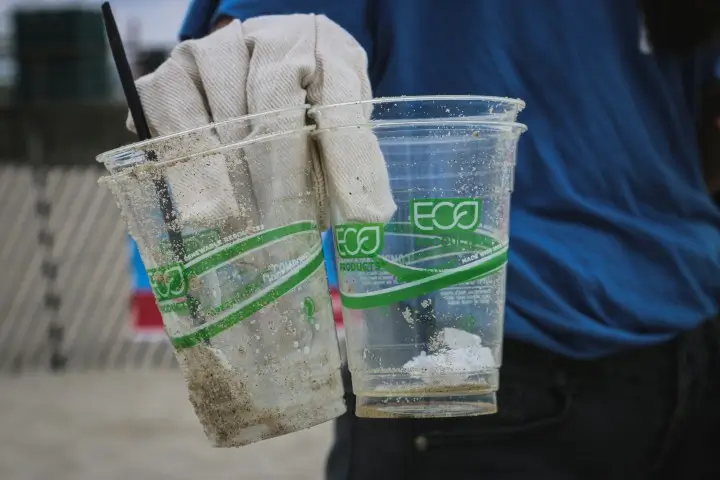
Minimal changes are another form of greenwashing. A company might slightly improve a product, such as adding 10% recycled content to their paper or creating one “eco” product line, but then market it as a huge sustainable achievement while leaving the rest of their range unchanged. Similarly, packaging design can also be misleading. Leaves, earthy tones, or “eco” symbols are often added to give the impression of sustainability, even if nothing in the production process has actually improved. These visual cues take advantage of our natural tendency to associate green imagery with environmentally friendly choices.

How to Choose Truly Sustainable Craft Supplies
The good news is that it is possible to avoid falling for these tactics by knowing what to look for. A first step is to check for reliable certifications. Labels such as FSC (Forest Stewardship Council) for responsibly sourced paper, GOTS (Global Organic Textile Standard) for textiles, or OEKO-TEX for fabrics tested against harmful chemicals give you concrete evidence that the product meets established environmental standards. For paints, glues, and other art supplies, look out for safety certifications like the AP Seal or CE Marking, which ensure the product is non-toxic and safe to use.
Reading the ingredients or material list is equally important. Many craft supplies contain plastics, solvents, or heavy metals that are damaging both to human health and to the environment. Choosing water-based paints, glues made from starch or PVA rather than harsh solvents, and natural or plant-based resins can significantly reduce your ecological footprint. The fewer synthetic and toxic substances involved, the better the product is likely to be.
Beyond the products themselves, it is worth looking at the companies behind them. Responsible brands tend to be transparent about where their materials come from, how they are processed, and what steps they are taking to minimize their impact. If a company makes big claims but provides little to no detail, that is often a warning sign. Transparency should be easy to find, not buried in fine print.
Sustainability doesn’t always mean buying something new, either. Choosing to buy from local suppliers or second-hand shops can often be a greener choice than purchasing mass-produced items marketed as “eco.” Reusing materials, whether it’s fabric scraps, old jars, or wood offcuts, can not only spark creativity but also keep perfectly good resources out of landfills.
Finally, trusting your instincts is an important part of avoiding greenwashing. If a product feels too good to be true, cheap, heavily marketed, and claiming to solve every environmental problem, it probably is. Asking questions, looking for proof, and comparing products across different brands can help you separate genuine sustainability from clever marketing.
Trust Your Instincts: If something feels too good to be true, it probably is.

Remember:
Greenwashing can be discouraging, but it’s also empowering to learn how to see through it. As crafters, every purchase is a vote for the kind of world we want to create. By staying curious, asking questions, and choosing genuinely sustainable supplies, we can avoid falling for empty marketing tricks. That way, our craft projects aren’t just beautiful, they’re honest, mindful, and kinder to the planet.